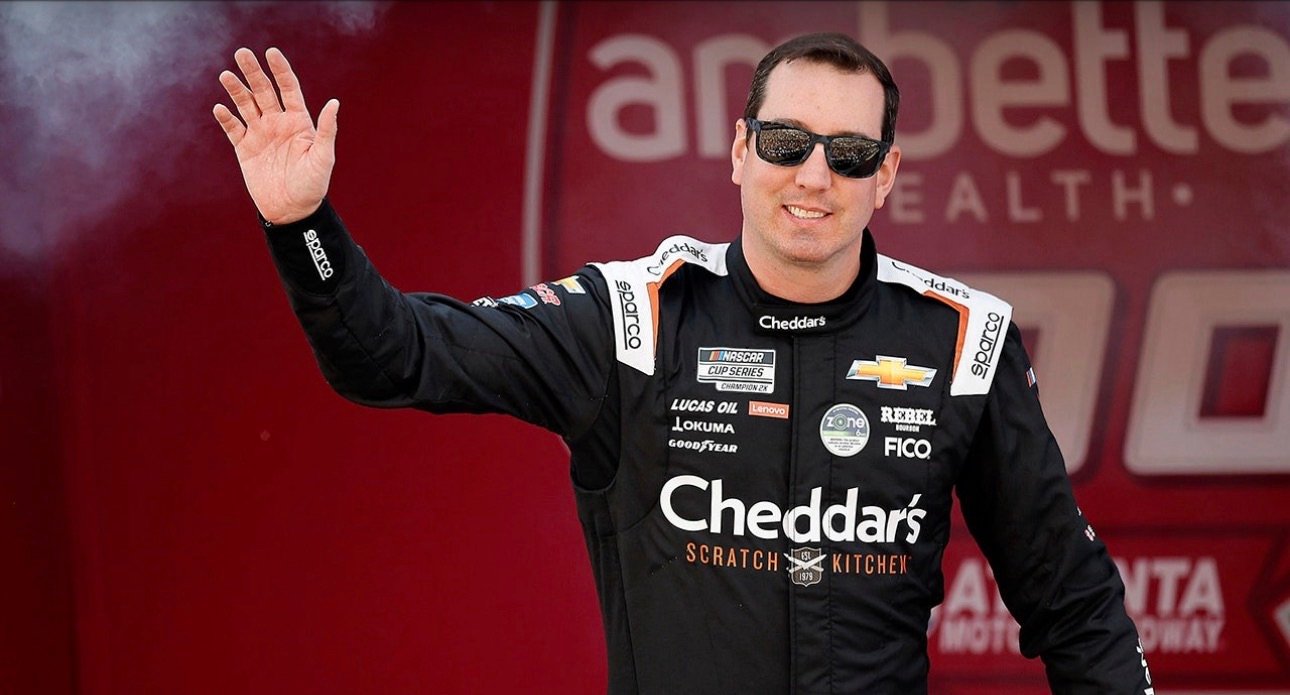
The racing world was rocked Thursday evening after reports confirmed that two-time NASCAR Cup Series champion Kyle Busch died at the age of 41 following a sudden severe illness. NASCAR, Richard Childress Racing, and multiple national outlets later confirmed the news after hours of confusion, speculation, and viral misinformation online.
For millions of fans, it felt impossible.
Kyle Busch was not just another driver. He was one of the most talented, polarizing, relentless competitors the sport has ever seen. Love him or hate him, you watched when he raced. You reacted when he spoke. You remembered when he won.
And he won a lot.
Busch captured Cup Series championships in 2015 and 2019, became the all-time wins leader in the NASCAR Truck Series, and built a reputation as one of the fiercest personalities in modern motorsports. He was aggressive, emotional, unapologetic, and brilliant behind the wheel.
But what unfolded after news of his hospitalization may say even more about America than it does about NASCAR.
From Hospitalization to Viral Chaos
Early reports Thursday stated Busch had been hospitalized with a “severe illness.” Then came screenshots claiming he had died. Some people believed them immediately. Others accused the posts of being AI-generated misinformation or political propaganda.
Within minutes, social media split into factions:
- people grieving,
- people denying,
- people accusing the media of lying,
- and others weaponizing the story for clicks, politics, and outrage.
That is modern America in real time.
By evening, NASCAR itself released a statement confirming Busch’s death, calling him “one of the sport’s greatest and fiercest drivers.” The organization extended condolences to his wife Samantha, his children, Richard Childress Racing, teammates, and fans across the country.
The internet, however, had already turned grief into spectacle.
NASCAR and the MAGA Era
For years, NASCAR has existed at the intersection of sports and politics in a way few leagues have. The sport carries deep cultural symbolism tied to patriotism, Southern identity, working-class America, and conservative politics. During the rise of the MAGA movement, NASCAR imagery and personalities often became attached to broader political identity.
Not every NASCAR fan is conservative.
Not every conservative is a NASCAR fan.
But culturally, the overlap became impossible to ignore.
That matters because in today’s environment, even tragedy becomes politicized almost instantly.
The reaction to Busch’s death exposed something uncomfortable about the digital age:
many Americans no longer experience events together. They experience them through tribal filters.
Some immediately questioned whether the media was truthful.
Others mocked people for doubting.
Conspiracy theories spread before official statements were even finished being written.
The internet no longer waits for facts. It rewards emotion first.
A Generation Raised on Outrage
Kyle Busch built his career as NASCAR’s villain. Fans booed him loudly for years. Yet strangely, that same intensity is part of why so many respected him. He represented something raw and increasingly rare in professional sports: authenticity without polish.
And in a strange way, America’s political culture mirrors that same energy now.
People are tired.
Distrustful.
Emotionally exhausted.
Constantly online.
Constantly reacting.
Every headline becomes war.
Every rumor becomes ammunition.
Every public figure becomes either hero or enemy.
Even death is consumed through algorithms.
Beyond Politics
For all the debates, accusations, and social media chaos, one reality remains:
A family lost a husband and father.
A sport lost one of its defining competitors.
Fans lost a figure who shaped an entire era of racing.
Whatever people thought of Kyle Busch personally, his impact on NASCAR is undeniable. He was one of the last larger-than-life personalities in a sport increasingly dominated by corporate media training and careful branding.
Kyle Busch was never careful.
That is why people watched.
And perhaps that is why this news hit so hard.